







Gone are the days when sales used to be just about pushing a product or service. In today's era, sales is consulting. It’s about solving problems, bridging gaps, and creating long-term value through trust and strategy. This blog explores the evolution of the sales management process, from transactional to consultative. This shift improves sales forecasting by giving better insights into what buyers want. We’ll also uncover what it takes to succeed in the consultative sales era, a defining force in modern sales.
Learning 1: From Transactions to Transformation
Sales used to be transactional: show the product, highlight benefits, close the deal.
Today, the buyer is informed, and the seller must be a consultant, not just a salesperson.
Modern sales is about:
- Understanding the business context
- Analyzing existing systems
- Identifying operational or strategic gaps
- Recommending customized, long-term solutions
Learning 2: The Power of a Consultative Approach
In consultative sales, discovery matters more than the pitch.
Sales consultants are expected to:
- Ask the right questions
- Listen actively
- Build a complete picture of the client's needs
- Co-create solutions that drive measurable outcomes
This approach focuses on adding value before asking for business, a foundational shift in sales strategy and planning.
Learning 3: The Four Pillars of Sales Influence
According to modern B2B sales studies and market psychology, buying decisions are influenced by:
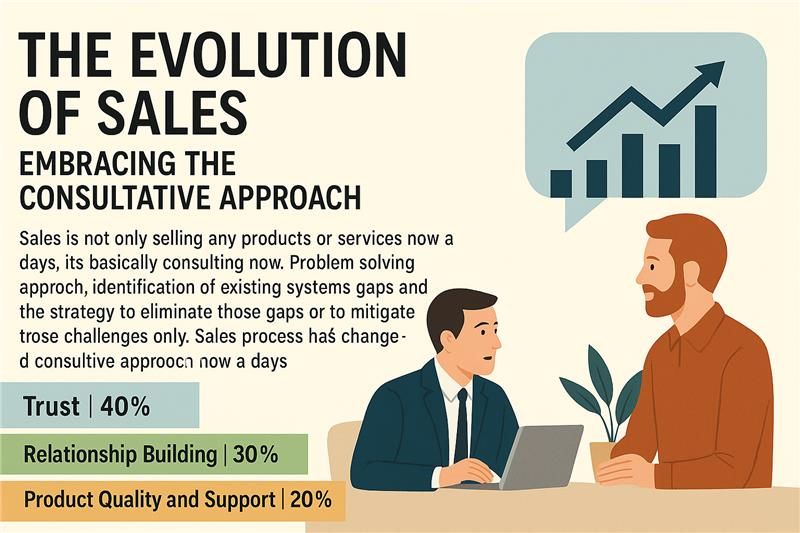
1. Trust and Credibility – 40%
- Clients buy from people they trust.
- Establishing yourself as a reliable, knowledgeable partner is critical.
- Actions, not just words, build trust: honesty, transparency, and delivering on promises.
2. Relationship Building – 30%
- Emotional connection and personal rapport influence decisions.
- Long-term relationships often outweigh short-term pricing.
- Relationship selling involves consistent engagement, empathy, and support.
3. Product/Service Quality – 20%
- A great product is essential, but it’s not the only differentiator.
- Buyers want solutions that integrate well with their ecosystem and scale with growth.
4. After-Sales Support – 10%
- Support and service defines the post-sale experience.
- Clients value responsiveness, resolution speed, and proactive communication.
- Even with a great product, poor support can lead to churn.
Learning 4: Identifying the Gaps
Before selling, top sales consultants in the sales management process analyze:
- Current tools and technologies
- Business workflows
- Data silos and inefficiencies
- Missed opportunities and operational risks
This diagnostic phase positions the seller as a trusted business advisor, not as a vendor.
Learning 5: Building a Strategic Solution
A consultative seller:
- Collaborates with internal teams
- Maps the client’s objectives to the solution’s capabilities
- Designs offerings aligned with business KPIs and measurable outcomes
Sales is now strategy, not just delivery. Businesses can shift from reactive selling to proactive problem-solving with the right sales strategy and planning.
Learning 6: Trust: The Real Currency of Sales
Building trust involves:
- Sharing case studies and success metrics
- Offering pilot programs or proof of concepts
- Demonstrating industry knowledge and domain expertise
In 2025 and beyond, trust is everything.
Learning 7: Making the Sale: A Value-Based Conversation
- Shift the conversation from “What we offer” to “How we solve your problem and what outcomes you’ll get.”
- Tools like ROI calculators, value-mapping frameworks, and strategic workshops help in creating value-first conversations.
Learning 8: Real-World Case Studies
Explore consultative sales success stories in:
- Healthcare tech
- FinTech platforms
- Cloud infrastructure services
- ERP and CRM solutioning
Each story reflects:
- A problem-solving approach
- Strategic alignment
- Strong relationship management
Every sales consultant must continuously learn and adapt.
Learning 9: Future of Sales
The future of sales includes:
- AI-driven personalization
- Predictive sales analytics
- Virtual consultation models
- Automated pre-sales support
But one thing remains unchanged: People buy from people.
Take Away: Sales is Consulting Now
The evolution of sales management made one thing clear:
Sales is no longer about pushing products; it’s about solving business problems.
To succeed in modern sales:
- Understand before you offer
- Diagnose before you pitch
- Build trust before you sell
And always remember the golden rule of modern sales:
“You’re not just selling a product - you’re selling a partnership.”