
Product engineering
Agile software development in short, tested increments
Agile software development delivers a product in small increments, so priorities can change between sprints without putting the whole release at risk. HabileLabs plans each sprint with you, reviews progress daily and tests every increment internally before it reaches your users.
- Two-week iterations shared with onshore teams
- Daily stand-ups and Scrum, in Jira
- 70% faster CRM loading after we took it over

Trusted by








What we do
Agile across design, development and delivery
We work this way on enterprise platforms and one-off apps alike, and join at any stage: an idea, an existing design or a proof of concept.
Agile approach
Quality first: work planned so it is built correctly from the beginning, for large and small apps.
Agile design
Design thinking and UI/UX work that fits how your users already use technology.
Agile development
Fast, iterative delivery of customer-focused products, with each increment adding value.
Agile delivery
Scrum with continuous integration, delivery and testing, so your product reaches app stores sooner.
How a sprint runs
Plan, manage, test, release
Small, consumable increments let us adjust quickly at any point without losing efficiency, value or performance.
Planning the sprint
We break the project into smaller pieces and map out sprints, so time and effort are clear before work starts.
Managing tasks and teams
We manage each sprint and review progress daily to keep the work consistent and efficient.
Completion
Every increment is tested internally before it is released to you or your users.

Agile in practice
Projects delivered in iterations
Two examples of agile delivery, from the case studies on this site.
70%
Sales CRM and native Salesforce app
Loading time cut after refactoring, delivered in a two-week iteration plan shared with the client's onshore team in Vienna, with daily stand-ups and Scrum.
Read the CRM case study17+ languages
Consent management platform
Built in agile iterations with regular client feedback, in 17+ languages, then moved to MongoDB when updates rose to 2,000 a second.
Read the case study
Why HabileLabs
Why teams run agile projects with us
Open communication
Agile is part of how HabileLabs works, so decisions are made together and communication stays open.
Quick changes
Small incremental updates to your existing codebase, delivered quickly.
Time and cost
Our knowledge, frameworks and processes let us deliver in less time, at lower cost.
Aligned to your business
Flexible engagement models, continuous communication and full visibility of project management.
Articles on agile delivery
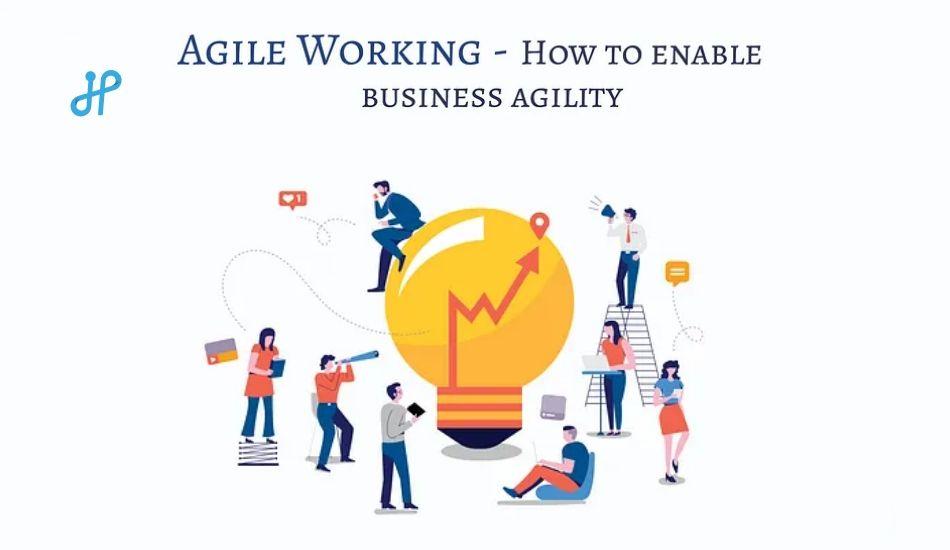
Prioritizing requirements, business agility and agile for mobile apps.

What clients say about working with us
In their own words.


RevBits has been closely working with HabileLabs since quite sometime now and the experience has been really nice so far. The team is professional, easy to work with and they ensure that every task assigned to them is completed within stipulated time.
RevBits
Mucteba Celik





Agile FAQs
Agile development: common questions
It is a way of building software in short iterations, or sprints, each ending in working, tested features. Priorities can change between sprints, so the product adapts to your needs instead of waiting for one long release.
We agree it with you. On a sales CRM and native Salesforce app we took over, our team and the client's onshore team in Vienna shared a common two-week iteration plan.
Yes. Our engineers join your stand-ups, Jira, Slack and Git. On the CRM project they held daily stand-ups with the onshore team and took part in regular Scrum meetings.
Every increment is tested internally before release, and our agile teams set up continuous integration, delivery and testing.
Yes. We make small incremental updates to existing codebases. When we took over a cloud CRM and its native Salesforce app, we moved code management to Git and cut loading time by 70%.