Capacity that follows demand
Auto Scaling adds capacity for peak days and removes it afterwards, so you stop paying for hardware sized for the busiest hour of the year.
We move applications, databases and whole data centers to AWS for teams that cannot afford a long outage: every workload assessed first, migrated in planned waves and handed back running.
AWS Partner, Advanced Tier Services
AWS cloud migration services move your applications, databases and infrastructure from on-premises servers or another cloud to Amazon Web Services. HabileLabs, an AWS Advanced Tier Services Partner, assesses each workload, picks how to move it (lift-and-shift, re-platforming or modernization), migrates in planned waves and tunes cost, performance and security once you are live.
Teams usually start planning a migration when one of these starts costing them:
Each of these has a known answer on AWS. The hard part is moving without breaking what already runs, and that is the part we plan for.
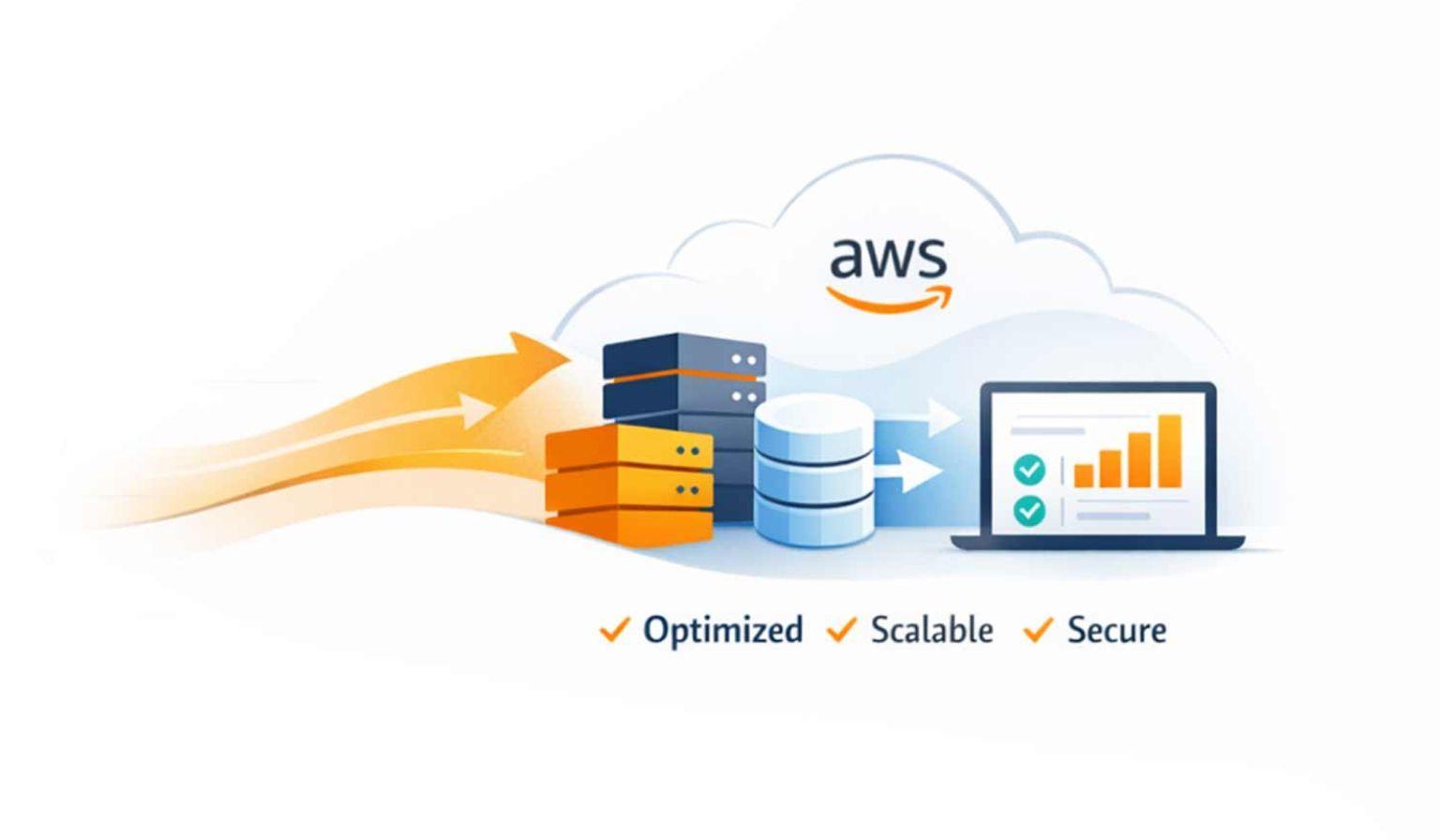
What our migration clients gain, and the AWS capability behind each.
Auto Scaling adds capacity for peak days and removes it afterwards, so you stop paying for hardware sized for the busiest hour of the year.
Multi-AZ deployments keep running when a data center fails. Aavas Financiers runs at 99.99% uptime since its move.
Rightsized instances, storage tiers and reserved capacity replace hardware refresh cycles and over-provisioned servers.
Infrastructure as code and CI/CD replace manual deployments. Neerja Software cut deployment time 70% after moving to Amazon ECS.
Encryption, identity and access management and logging are set up from the first day, following the AWS Well-Architected security pillar.
Automated backups and failover, with recovery objectives agreed before cutover rather than discovered during an outage.
One team from the first assessment to your first weeks in production.
An inventory of servers, applications and dependencies, a migration strategy for each workload and a wave plan your teams can schedule around.
Accounts, networking, identity and guardrails set up before the first workload moves, so every later wave lands on the same base.
Lift-and-shift, re-platforming or modernization per workload, including moves from Azure or GCP and full data center exits.
Dedicated checks confirm every dataset arrived complete and consistent before any system is switched over.
Switch-overs are scheduled with your business so downtime stays as short as the workload allows, and in some cases is zero.
Performance and cost tuning after go-live, with documentation and knowledge transfer so your team can run what we built.
Four stages. You see the plan for every workload before anything moves.
We map your infrastructure, applications and dependencies, check migration readiness and flag the risks.
We choose a strategy for each workload and set the order and timing of each migration wave.
We move workloads with automation, validate the data and cut over in the windows we agreed.
After go-live we tune performance, cost and security, then hand over or keep running it for you.
Client results on AWS
They move applications, data and workloads from on-premises servers or another cloud platform to Amazon Web Services. A typical engagement covers a migration assessment, strategy and roadmap, AWS environment setup, application and database migration, data validation, security planning and post-migration optimization.
It depends on how many applications you have, how they depend on each other and how complex they are. A small set of workloads can move in a few weeks; a full data center can take a few months. The assessment gives you a wave-by-wave plan before work starts.
Some workloads need a short switch-over window; others can move with no downtime at all. How long a window you need depends on the system and on how carefully the cutover is planned, which is why we agree each window with your business before the migration starts.
It depends on the application's architecture, dependencies, performance needs and how much change your business can take. The common choices are lift-and-shift (move as is), re-platforming (small changes to use managed AWS services) and modernization (rebuild parts for cloud-native services). We recommend one per workload during the assessment.
Yes. We run cloud-to-cloud migrations from Microsoft Azure and Google Cloud Platform (GCP) to AWS, as well as on-premises and data center moves. The approach depends on the workloads, their dependencies and your business goals.
We review your infrastructure, applications, workloads, dependencies and business requirements. The output is a view of migration readiness and risk, a strategy for each workload and a roadmap. Start it from the form on this page or through our cloud assessment.
Yes, when it is planned that way. AWS provides the security controls; we set up encryption, identity and access management, logging and network isolation before any data moves, and validate the data after it arrives.
We tune performance and cost in the first weeks live and hand over documentation to your team. If you prefer, we keep running the environment for you under AWS managed services, with 24x7 monitoring.
Tell us what you run today. An AWS-certified architect will come back with an approach, the risks and a rough plan, whether or not we end up working together.