Faster, smaller releases
Services that deploy on their own and a CI/CD pipeline let teams ship one change without redeploying everything. Neerja Software cut deployment time 70% on Amazon ECS.
For teams whose legacy applications slow every release and cost more each year to run: we replatform, refactor or re-architect them on AWS in planned phases, one workload at a time.
AWS Partner, Advanced Tier Services
AWS cloud modernization services change how existing applications, infrastructure and data are built and run so they use AWS managed and cloud-native services such as containers, serverless functions and managed databases. HabileLabs, an AWS Advanced Tier Services Partner, assesses each workload, chooses whether to replatform, refactor or re-architect it, and delivers the change in phases for teams running legacy or monolithic systems.
Teams that have already moved to the cloud usually start modernizing when one of these keeps coming back:
Each of these comes from how the application is built rather than where it runs, so we change the design one workload at a time.
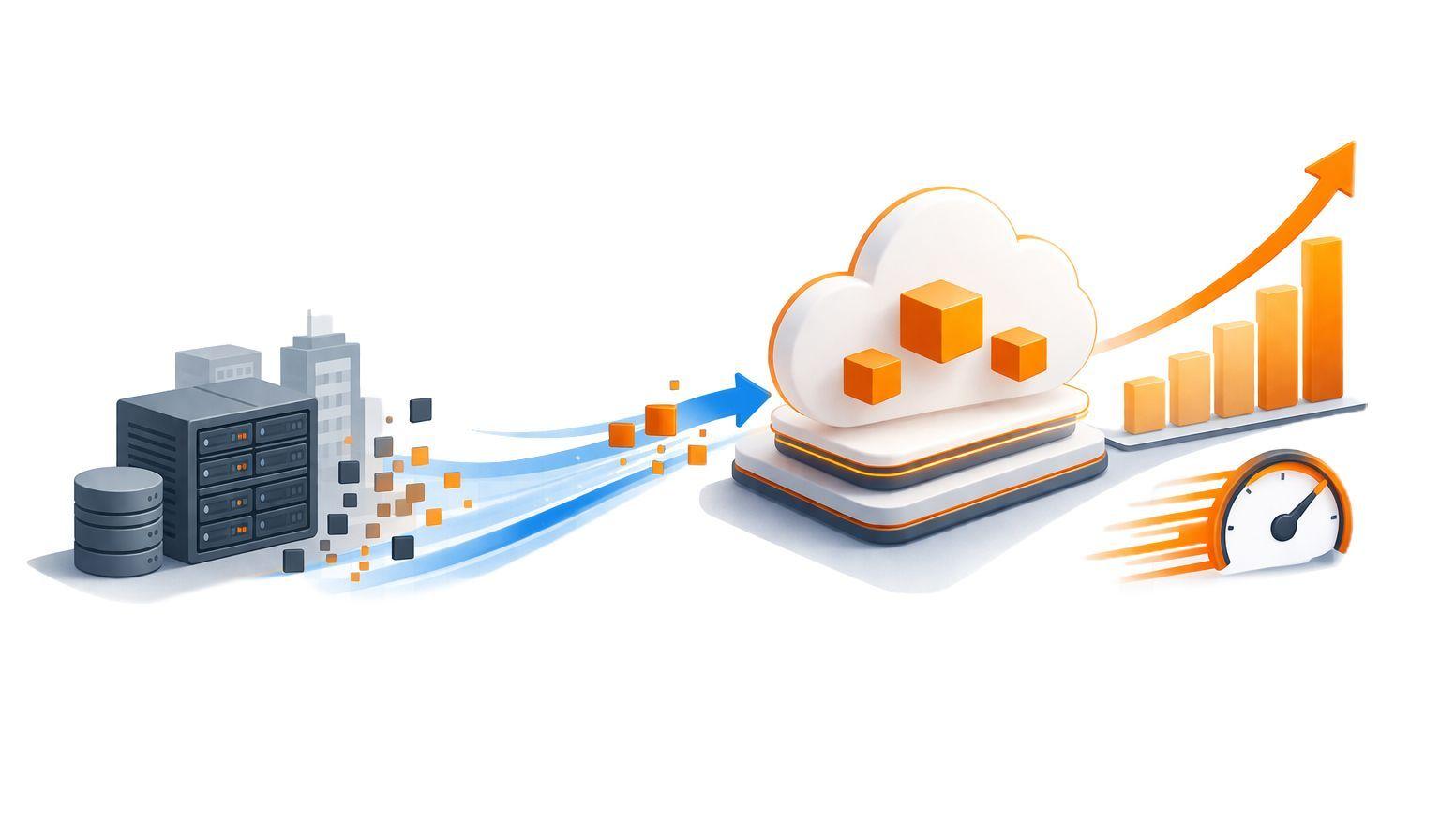
What our modernization clients gain, and the AWS mechanism behind each.
Services that deploy on their own and a CI/CD pipeline let teams ship one change without redeploying everything. Neerja Software cut deployment time 70% on Amazon ECS.
Containers on AWS Fargate and functions on AWS Lambda scale with traffic, so the busiest day of the year no longer sets the size of your servers.
Managed services and pay-per-use compute remove idle servers and routine upkeep. Memorizz runs at about 30% lower operational cost on Amazon ECS with AWS Fargate.
Unsupported runtimes and self-managed components are replaced with managed AWS services, which take over patching and remove a common source of audit findings.
Multi-AZ or multi-region deployment, automated backups and failover become part of the new design, with recovery steps defined before go-live.
Managed databases, APIs and event-driven pipelines make data easier to query, report on and connect to AWS analytics, machine learning and generative AI services.
Each workload gets the change it needs. Some only need a new platform; others need to be re-architected.
Technical debt, dependencies, business value and risk reviewed per application, with a recommended path and a phased roadmap your teams can plan around.
Monolithic applications broken into services that can be built, tested and released on their own, in an order set by business value and risk.
Workloads moved to Amazon ECS on AWS Fargate where they need runtime control, or to AWS Lambda and Amazon API Gateway for event-driven services and APIs.
Self-managed databases moved to Amazon RDS, and data reshaped into platforms that reporting, analytics and AI services can use, with integrity checks at each step.
Infrastructure as code with AWS CloudFormation and automated build, test and deploy pipelines, so every environment is created the same way.
Workloads consolidated on AWS from Microsoft Azure or Google Cloud, or moved off physical infrastructure in structured, planned phases.
Four stages. Each application gets its own path, agreed with you before any code changes.
We map applications, dependencies, data and technical debt, and rank each workload by business value, risk and expected return.
We choose a path per workload, set the order of work and agree downtime limits and rollback steps with your team.
We rebuild in phases, starting with a pilot, using parallel environments, automated tests and blue-green or canary releases where they fit.
After go-live we tune cost and performance, then hand over with documentation or keep running it for you.
Client results on AWS
They change how existing applications, infrastructure and data are designed, deployed and run so they use AWS managed and cloud-native services. Work can include refactoring code, moving to containers or serverless, adopting managed databases and adding DevOps automation, for workloads already on AWS, on premises, or on Microsoft Azure or Google Cloud.
Migration moves applications, data or infrastructure to AWS; modernization changes how those workloads are built, deployed and managed. It may mean refactoring code, replacing unsupported components, adopting managed AWS services or splitting a monolith into microservices. You can migrate first and modernize later, or combine both when the business value justifies the extra complexity.
Replatform when the application can use managed AWS services or containers without extensive code changes. Refactor when the code itself limits performance, scaling, security or releases. Re-architect when a tightly coupled or business-critical system cannot support what you need next. We recommend a path per workload after weighing technical debt, dependencies, business value, risk and expected return.
A focused workload or pilot can take a few weeks; a complex application or a portfolio can take several months. The timeline depends on the number of applications, architecture, dependencies, data volumes, compliance requirements and the path chosen. We start with an assessment and give you a delivery roadmap before confirming dates.
Use containers when an application needs runtime control, portability, long-running processes or the same deployment in every environment; on AWS that is often Amazon ECS with AWS Fargate. Use serverless, such as AWS Lambda, for event-driven services, APIs, background jobs and variable demand. Many programs use both, chosen by application behavior, security, team skills and running cost.
By finding dependencies first, working in phases and starting with a pilot workload. We use parallel environments, data replication, backups, rollback procedures, automated testing and blue-green or canary releases where they fit. Downtime limits are agreed per application during the assessment, because the safest approach depends on its architecture and how critical it is.
Yes, when security is part of the design. AWS provides the security services; we set up identity and access management, encryption, monitoring and logging for each modernized workload. Replacing unsupported runtimes and components also removes a common source of vulnerabilities and audit findings.
It builds the foundation, but it does not make data AI-ready on its own. Modular applications, APIs, managed databases and event-driven pipelines make data easier to connect to AWS analytics, machine learning and generative AI services. Data quality, governance, lineage and access controls still need their own work.
Tell us what you run today. An AWS-certified architect will review it and come back with a recommended path per workload, the risks and a rough roadmap.